Saturday, 30 November 2019

Alcohol Prohibition – Shiela Devi - A woman with a lion’s heart


Hailing from Bihta, 35 kms away from Patna , famous for brass work and Son River, Shiela Devi, a member of Jatta Sattu Producer Group (PG) who works as Community Mobiliser (CM) at BRLPS Jeevika is an epitome of bravery.


A few years back Shiela Devi led a miserable life. Her husband was an alcohol addict and would come home drunk everyday. He would be violent and Shiela Devi suffered domestic violence almost every day. In fact, this was a problem of many households. Shiela realised that the men would not listen to reason and the best way to stop this social ill of alcohol addiction was to shut down the liquor shops. So one fine day, she along with 2 friends of hers, took a lead to force the alcohol shops shut. 

Her movement gained momentum as other affected women joined her to demand closure of liquor shops. During this period, she received countless death threats from the villagers who owned and ran the alcohol shops. But this did not deter her and she continued her protest valiantly. Because of protests by her and other women and organisations, the government of Bihar finally brought about liquor prohibition in the state in 2016.

Shiela Devi then persuaded  her husband to quit alcohol consumption. Now, her husband leads a happier life working as a mason, earning a decent livelihood. So is the case with other men who would earlier squander their earnings on liquor and be a nuisance to their families as well.
In 2018, Shiela Devi received accolades from the Prime Minister Narendra Modi for her bravery and contributing her part, however minor, to help end alcohol consumption in her village.


Monday, 15 July 2019

JEEVIKA Changing Lives of Rural Women in Bihar - Success Stories


1. Urmila Devi is today a member of ‘Shivguru Shambu Self Help Group’ of Kranti Village Organization (VO) of Panchang Community Level Federation (CLF).
She has three children of whom two are boys. In 2012, she started working in the Koderma mica mines. Koderma is a district in Jharkhand bordering Nawada. She would leave her home every morning at 8 AM travelling with 10 other men workers. She would return every day at 8 PM always feeling insecure during commuting back at night.
This hard work of Urmila Devi, spending the day in mica mines, brought her Rs. 150 to 200 per day.
Change came for Urmila Devi in 2013 when she attended a Self Help Group Meeting held by Jeevika which her husband initially disapprove. However, she went ahead and borrowed Rs. 10000 from the SHG, having decided to start her own business. With this money she started a poultry business. In the business she reached breakeven point but could make no profits as she faced the problem of chicken dying of diseases.
However, Urmila Devi did not give up. She took another loan of Rs. 10000 to buy a stitching machine to start a tailoring shop of herself. She can stitch blouses, frocks, skirts and other garments. Offering economical prices to her customers, she is easily able to earn Rs. 100 a day. Although her earnings per day are lower than what she earned at the mines, her work now is not hazardous and is able to earn better on an average. She also can tend to her family and do household chores and lives a better, happier and a healthier life now.
Jeevika has put a smile on her face.

2. Pooja Singh joined Jeevika in 2013 and became the member of Astha Self Help Group
She became Community Mobiliser (CM) of Kranti Village Organization in the same year at the age of 18.She completed  her studies till 8th Grade before joining Jeevika and due to family problems she couldn’t pursue studying further anymore. She performed house chores and won’t go outShe was married off at 17 for no apparent reason. She then completed her 12th in 2016 when a CM told her to carry on her studies. She couldn’t afford medicines and pay for operation. Alsoshe could not bear expenses for her kids’ education.
She took Rs. 10,000 from Self – Help Group (SHG) for poultry, 15,000 for cow and 35,000 for the poultry cage. With Rs. 800 for one cage, she made 300 cages and got 540,000. 
Pooja became Book Keeper in 2014 and carried out CLF Formation in 2015 and named it Panchang.
Two reporters came from media channel and interviewed her. She faced criticism and her husband initially disapproved of her stepping outside the house. But her Mother-in-law supported her.
She has led CM Exposures in SHG’s and VO’s and assisted District Magistrate visits and Health and Nutrition and Sanitation visits in November 2018. Kranti VO, the VO that she is the CM of, was visited by the external visit team State Rural Livelihood Mission (SRLM) from Mizoram.
She, through her work worth appreciating, has earned her name in Jeevika and is very popular among her peers.

Jata Sattu Producer Group, Bihta, Patna, Bihar - My experience at the Village Immersion


Jatta Sattu Producer Group

Bihta is also known for Jata Sattu. Jata a traditional grinding stone used to make sattu (roasted gram)- which makes this product a unique healthy product. In Bihar and parts of Uttar Pradesh, sattu is a popular litti chokha food item. People in rural as well as in urban areas drink sattu sherbet during summer. Once known as poor man’s staple food, sattu is costly now, branded sattu being sold at Rs 150 per kilo.

Role of Jeevika -

Bihta, a block in Patna known for Brass work and Sattu Production, there, Jeevika has mobilised a Producer Group for Jatta Sattu. It consists of 5 members. The production of Sattu depends on the availability of Gram and other grains. The production is nil if the ingredients are not available.Sahrasa devi  and like others who are members of Producer group works for   about 5-6 hours to make 5- 8 kg of Sattu everyday. 


Traditional Process- 

First, the sattu is roasted in a wok full of baalu soil which is abundantly available in Bihar. After the sattu is roasted, it is turned into a powdered form by compressing it into the Jatta. Jata, a traditional grinding stone used to grind dry food items is an important tool in every rural household. Women like Shiela Devi are giving jatta a new lease of life by making sattu with it. Jatta Sattu is packed and sold in local market.

Capital and Market-

The SHG member  of Bhita  took a loan of 25,000 to start the Producer Group from Jeevika .  With the help of this they earn Rs. 57,600 annually. It  is sold to traders , shops and also to melas. The producer group make Sattu at common facility centre to aggregate the produce   from different households.
The sattu is  sold during Saras Mela. They get Rs. 2000 as the income at Saras Mela.
SHG members  contacted Big Bazaar to sell their Sattu but Big Bazaar told them to get the sattu registered. The SHG members need to get FSSAI certification in order to sell to big retailers. However the know how of getting certification  is completely lacking amongst people who are illiterate.
It was informed  that locally available maghi gram, popularly known as dehati chana is used  for making jata sattu..It is sold in attractive packs of 250 gm to 1 kg in eco-friendly containers in different stores of Patna.


Way forward-

Jeevika can render 45 days training and skill development programs for the beneficiaries so that they can earn and make their lives better. The beneficiaries and Jeevika can come up with their own brand. 
Jeevika plans is to engage more women for making Sattu. It plans to set up jata at different other places in the district for making of jata sattu to create more opportunity for women.
Jata sattu has been branded Nalanda Sattu, after UNESCO declared it as World heritage Site. Branding the product in the right way is a good marketing strategy to reach out to metros like Delhi, Mumbai, Bangalore etc where there are big retails chains to cater to demand.

_______________

Village Immersion report of Bihta Block, Nalanda District, Bihar


Submitted by Kevika Yadav, Young Professional (YP)

Village Immersion is part of the orientation programme of Jeevika for Young Professionals. I stayed in Bihta block of Patna district for one month to understand socio economic profile of village and how men and women engage in different activities to secure livelihood. The report of Village immersion in Bihta covers the micro enterprises and traditional process that have been taken by people of Bihta which not only makes them earn money but also has kept the tradition alive with the help of Jeevika initiative of Government of Bihar.
The document is divided in three sections
A     Brasswork of Bhita
B-    Jatta Sattu Making in Bihta
C-    Jeevika Changing lives of Women- Stories of two women of Bihta
This document was submitted to Jeevika, Government of Bihar in 2018.
_________________________________________________________________________________

A
Brass work in Bihta
Jeevika’s role in keeping tradition alive
Tradition of Brasswork-The brass work of Bihar and few skilled people owes its legacy to  pre-historic age which was at peak in Mauryan and Gupta age. However very few blocks and villages of Bihar have brass work and craftsmanship. Few Blocks away from Patna are engaged in making utensils traditional brass utensils manufacturing units who make brass utensils supply to neighbouring Jharkhand and eastern Uttar Pradesh.
Role of  BRLP & Jeevika -Understanding that brass work has a good demand from rural and urban area and has potential to be leveraged by encouraging local manufacturing  to bring income to rural folks, Jeevika  took the step forward to  empower groups of women to take up this art for livelihood.
Targeting women from rural households in six of Bihar’s poorest districts, Jeevika began in 2007 with the objective of social empowerment of the poorest rural households, followed by economic empowerment and poverty reduction. The programme now runs across Bihar’s 38 districts and 534 blocks. 

Jeevika’s structure is a bottom up approach. 10-15 women organise as a SHG to take loans on interest and obtain credit from banks. They also form producer organisations centred around an economic activity, such as honey production or making low-cost solar lamps for students. 20 to 25 of these SHGs form a Village Organisation (VO), while 30 to 40 Village Organisations band together to form Cluster Level Federation (CLF)
Formation of Self help groups
Bihta block is 35 kms away from Patna and is a growing township. It is well connected with roads and railways. There are couple of SHG formed and supported by Jeevika. The SHG group members are members of BRLPS Jeevika  and are  also part time workers there. As they belong to Palak SHG and Amit SHG, they took loan of Rs. 30,000 for the brass working 2018. Their annual earning from brass work is Rs. 360,000. The SHG members are engaged in doing work like flattening plates with hammer, giving shape to pots or bowls with chisels, and polishing utensils.  “We are in need of more capital so that we can set up our own brass work store and enhance our income” says Asha Devi member of SHG.
Sita Devi, Rinku Devi and Asha Devi earn their livelihood from brass work. They work for an agent who pays them according to their daily contribution to the work which includes cleaning, washing and shining the brass utensils intensively and passing them in for further work.


Market and Demand-
The brass utensils are sold at Sonpur Mela, Saras Mela and also supplied to Jharkhand. The SHG members supply the finished product to contractor who pays them very little and sometime will not pay if the work is not done. Rinku Devi informed that if the SHG is provided with direct market linkage with the retailers then they will not face exploitation from contractors and agents. “After hours of hard work in difficult conditions, there may be days where they are under paid or not paid at all” Informed a SHG Member.


Despite fast-changing lifestyle and habits, including changes in cooking utensils, brass utensils, considered auspicious, are still in high demand, particularly in rural and semi-urban areas. The utensils used for offering prayers and rituals, at home and in temples, are helping brass utensils manufacturing units in Bihta thrive. More demand is a positive sign for manufacturers as well as for workers, as they get to earn more. Through the year there is demand for brass utensils, but it peaks during the traditional marriage seasons, locally known as lagan, which is usually held in March during spring, April-May during summer and November-December during winter. There is a tradition of giving brass utensils to daughters in marriage.
There are few units run from homes, shops and workshops in the bylanes of Bihta. The prime requirement for the small scale units like Bihta is to have uninterrupted power supply, capital to buy implements and raw material, training and skills, marketing arrangements to reach out to urban area.

Traditional Process-
The lengthy process of making of brass utensils start with melting of raw material, molding it into nuggets, flattening and shaping them. Most of the work is done manually. Though there are some machines in few units. These use earthen stoves buried in the ground to control temperature for heating the plates before shaping them. Designs are still made by master craftsmen with details having been passed orally through generations.


Way forward
Jeevika is focusing on imparting trainings on financial Management and how to reinvest their profit and make business plan so that their business can be a success.
There is also a need to provide loans to the SHG members to enable them to buy raw material and meet the expenses that go in the unit. Jeevika has provided interest free loans to SHG members.
There are lessons to be learnt from Districts of Mirzapur, Moradabd of UP where traditional craftmanship of brassware has been taken up in a big way. The brasswares from these districts are exported and the designs are as per the trends.
There is a need to modernize the units so that they can achieve efficiency and competitiveness in terms labour, power supply, designs of utensils etc.
Jeevika may also consider imparting specialized training in making brasswares, artefacts and designs which are in demand in  urban areas. Collaboration with the Institutes like NIFT and NID can be worked out to have training in designs so that people are encouraged to undertake brassmaking not only for livelihood but also to build competencies to export these products.

Conclusion: 
The traditional Brass industry of Bihta and adjoining blocks need to be promoted. Jeevika has done exemplary work of empowering women of Bihta block by giving loan which has enabled them to secure livelihood by making utensils. However much needs to be done  to scale up this craftsmanship by providing skills, making business plans, aggregating the produce and negotiating, understanding markets and accordingly taking right kind of designs and making them for urban markets


Saturday, 29 July 2017

'NEVER LET ME GO' BY KAZUO ISHIGURO - BOOK REVIEW

'We didn't have to look into your souls. We had to see if you had souls at all.' - Miss Emily


 COVER

The book has more than one cover. The latest cover of the book has the movie still where Andrew Garfield and Carey Mulligan are photographed running towards Clevedon Pier. The wood - like walkway has lamps on both the sides.

RELEASED : 2005


AUTHOR

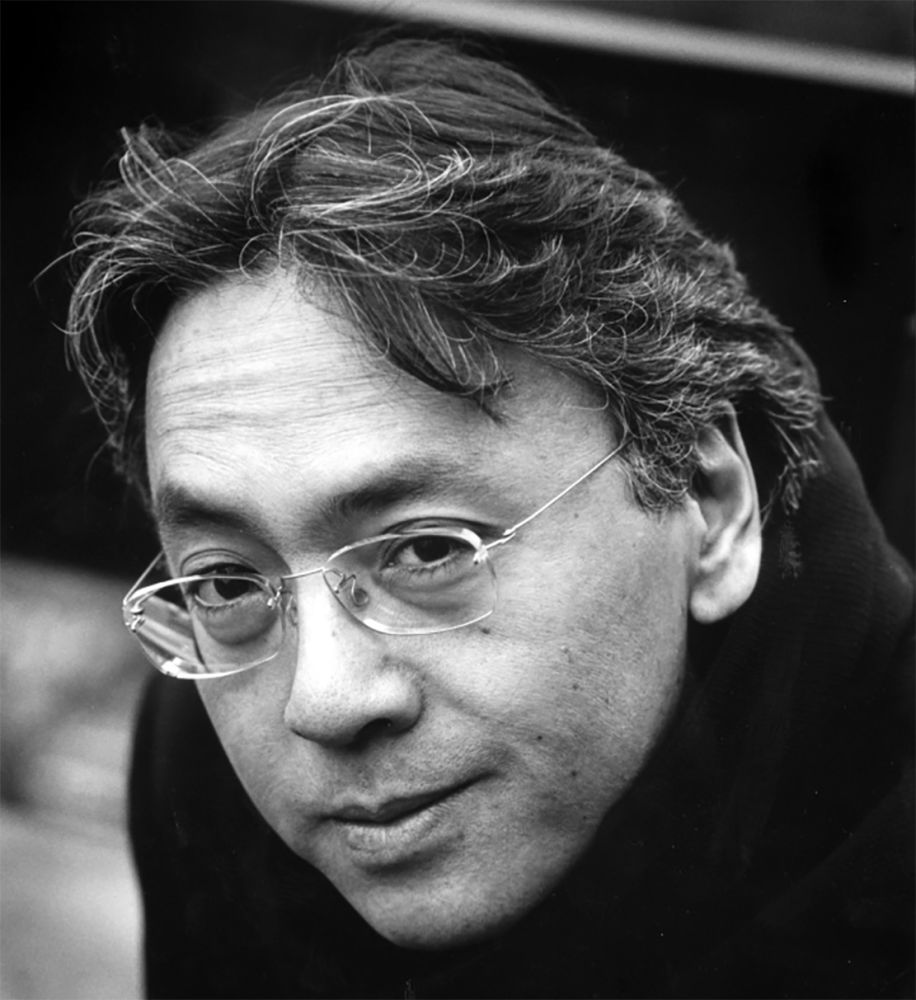
Man Booker Prize winner, Kazuo Ishiguro, a British author and screenwriter, was born on 8th November 1954 in Nagasaki Japan. His family later shifted its base to England when he was very young. He Graduated with Honors degree in English and Philosophy from University of Kent and did his Master’s from the University of East Anglia creative writing course.

 Besides winning the Man Booker for his noted novel, ‘The Remains of the Day’, he was also 4 times nominated for Man Booker Prize. 

He was awarded Winifred Holtby Memorial Prize in 1982 for ‘A Pale View of Hills’, OBE in 1995 and Chevalier de l’Orde des Arts et des Lettres in 1998.

Some of his notable works are ‘The Remains of the Day’, ‘Never Let Me Go’, ‘A Pale View of Hills’ and ‘When We Were Orphans’.

GENRE 
Sci-fi, Dystopia, drama

WRITING STYLE 
Ishiguro uses a descriptive and narrative style of writing. In the book, he tells the story through the protagonist, Kathy. 

NOVEL - SUMMARY
Set in 1980’s in utopic Hailsham, an imaginary Residential school based in England, is a story about three friends - Ruth, Tommy and Kathy H.

The book begins in 1990’s with Kathy narrating the story from the time gone by (1980’s) and recollecting the days she spent with Ruth and Tommy simultaneously. The story deals with love, friendship, uncertainties, loss and grief.

The school is situated away from the hustle bustle of the city. The school has an art gallery where the paintings made by students are taken to. The students do not know the reason behind their paintings being taken to the gallery. 

The students of Hailsham are told that they are special but aren’t told why. They are all kept in dark until they reach their adulthood. After their 18th birthday, Kathy, Ruth and Tommy move out of the school and start an independent life. They eventually feel shattered and lost once they are confronted with reality.

They all ‘complete’. They, at Hailsham, unlike the students of other schools, are trained to become organ donors. While Kathy goes on to become a ‘carer’, Ruth and Tommy become ‘donors’. 
What does the store have for them?

CHARACTERS
KATHY : A protagonist, Kathy H.  is a sensible and a reserved lady who enjoys her own company.

RUTH : Ruth, contrary to Kathy, is a dominating and extroverted person likes to be surrounded by people. She comes across as haughty and selfish. She tries too hard to be like her seniors, Chrissy and Rodney.

TOMMY : Tommy is a shy kid who is bullied for his short temperament.

MY STAND
Worth a read

Monday, 16 January 2017

'WE NEED TO TALK ABOUT KEVIN' : LEAVING THE AUDIENCE PUZZLED - MOVIE REVIEW

'Why would I not understand the context? I am the context!'
                                                                                               -'We Need to Talk About Kevin'


                                                        .REMARKABLE MOVIE.

'We Need To Talk About Kevin'.
Honestly, I'm speechless!

This is one of the movies I always wanted to watch. I watched it somewhere around Christmas last year. I am overly obsessed with this 


SUMMARY 

The movie is based on a sour between Kevin Khatchadourian and Eva Khatchadourian. It was screened at Cannes Festival 2011. The former had been a difficult kid since childhood who, as a baby, cried incessantly and the latter had a hard time raising him. Kevin, later in the movie, goes on to commit a massacre for which, he was certainly put behind the bars. The movie consists of flashbacks.


Tilda Swinton won awards like BAFTA and Golden Globe Award.  Swinton and Ezra Miller have delivered a Stellar performance. 


Sunday, 23 October 2016

Thursday, 13 October 2016

WHEN BAICHUNG BHUTIA AND ANIL KUMBLE VISITED JAIPUR (Zee Jaipur Literature Festival 2016)

Meeting the 'Sikkimese Sniper' A.K.A Baichung Bhutia had always been one of my biggest dreams. 


It was confirmed that Baichung Bhutia and Anil Kumble will be visiting the Festival (JLF 2016). 
I was thrilled post - confirmation news. I had been waiting eagerly to meet him since the day I got the news.


Anil Kumble(Second from left) and Baichung Bhutia (Third from Left).
COURTESY : Google

As I was volunteering once again for Jaipur Literature Festival 2016 (JLF 2016), unlike last year, I was assigned another venue (Narayan Niwas) which was 10 minutes away from the main venue (Diggi Palace).

The venue he had his interactive session was the latter venue (i.e. Diggi Palace). As soon as I came to know about it, I was little sad as my chances of meeting him were zero (because I was placed at another venue from where I wouldn't have gotten permission to go to the main venue to meet him).

So close yet so far. 

I told my co - volunteer cum friend how I wanted to meet Baichung. She told me she's met him once in Kolkata when Bhutia was on a tour. I got to know that he frequently visits Kolkata. She also told me that to her, he came across as a very reserved and silent person.


She (my friend) promised to make me meet him whenever Baichung is in Kolkata and only if we're lucky enough to spot him or meet him. 


I'm eagerly looking forward to that day. HAHA.

Sunday, 4 September 2016

THE QUEEN OF BHUTAN

"Happiness can be found, even in the darkest of times, if one only remembers to turn on the light." 
¬ALBUS DUMBLEDORE.

Before becoming a volunteer at Jaipur Literature Festival (JLF) frrom 2015 onwards, I was, like any other person, also a visitor at the festival.


Let's go back in time.


JANUARY 2012 :

As soon as I reached the entrance of JLF (Diggi Palace, Jaipur), I witnessed a huge throng at a short distance, I failed to understand at first the reason behind such a huge crowd. I went a little further and pushed myself ahead in the barbaric crowd. As I reached a spot where everything was clearly visible, I saw 2 ladies signing diaries, 

WHO WERE THEY?

Well, they were the Queen (Dorji Waghmo Wangchuck) and the Princess (Jetsun Pema) of Bhutan. Yes, they had confirmed that they'll be attending JLF 2012. Even the Prince (Jigme Khesar Namgyel Wangchuck) had plans to attend the Festival but couldn't as he was exhausted after a long journey from Bhutan to India.


Queen Dorji Waghmo Wangchuck (center) with the festival Director, Namita Gokhale (right).
COURTESY : www.jaipurliteraturfestival.com


Delighted, I impatiently waited for my turn to take their autographs.
When my turn came, I gave my diary to the Princess to sign. 
'Aapka naam (Your name?)?', She asked.
Princess Jetsun Pema.
COURTESY : Google

'Kevika', I replied.
'Aapka naam' was the only Hindi word that she knew back then. 
After taking her autograph, I waited for the Queen, Dorji to sign my diary.

AFTER A SHORT WHILE :

The Queen held my diary.
'Your name?', she asked politely.
'Kevika', I said.
She nodded and began to sign.
Queen Dorji Waghmo Wangchuck's and Princess Jetsun Pema's autographs (respectively).

'Nice name.' She complimented. .
'Thank You.' I said delightedly.
She gave me a warm smile and started walking towards the entrance.
I couldn't contain my happiness. I was elated. I was on cloud 9!
Yes, I was happy because the Queen of Bhutan gave me a compliment. 

My day started on a low note but that one compliment turned my doleful day into a joyous one.


           'There's a good in everything bad'.


Wednesday, 1 June 2016

FIVE JAPANESE GREETINGS AND PHRASES FOR BEGINNERS (AND YOU CAN USE IN DAILY LIFE)

Japan, the Land of the Rising Sun, is the third largest economy and the most technologically advanced country. It has made stupendous contribution in every field from automobiles to robotics. Doraemon, Pokemon, Nintendo Gameboy, PSP, Anime, Manga, etc. are all Japan’s creations.
Japan has a rich history and culture. It is a mix of ancient and modern. It has sure embraced modernity but has also preserved its old customs and culture.
Here is the list of 5 Japanese Phrases and words you can use in daily life.


1.     KONNICHIWA


                     ‘Konnichiwa’ means ‘Hello’ or ‘Good Day’.


2.     ARIGATO GOZAIMASU


‘Thank You’. It is a polite manner of saying Thank You. Or you can simply say, ‘Arigato’.


3.     LIE


No, ‘Lie’ doesn’t mean to lie (as in English). Lie in Japanese means to say ‘No’. It is pronounced as Lee-ay (‘ay’ like in ‘lay’)


4.     GOMEN’NASAI


        You can say ‘Gomen’nasai’, If you want to apologize. It means ‘I am Sorry’.


5.     SUMIMASEN


 Sumimasen’ means ‘Excuse Me’.


It’s time to show off your skills! :D


Alcohol Prohibition – Shiela Devi - A woman with a lion’s heart

Hailing from Bihta, 35 kms away from Patna , famous for brass work and Son River, Shiela Devi, a member of Jatta Sattu Producer Group (P...